The Letter from Birmingham Jail, written by Martin Luther King Jr. in 1963, is a seminal work in the history of the American civil rights movement. This powerful letter, penned while King was imprisoned for his participation in a peaceful protest, has become a cornerstone of rhetorical analysis due to its masterful use of persuasive techniques. The Letter From Birmingham Jail Rhetorical Analysis Worksheet is an invaluable tool for students and scholars alike, providing a structured approach to dissecting the letter’s complex arguments and emotional appeals.
By examining the letter through the lens of rhetorical analysis, individuals can gain a deeper understanding of how King’s words were carefully chosen to inspire, to persuade, and to challenge the status quo. The worksheet guides users through a systematic analysis of the letter’s content, encouraging them to identify and explore the various rhetorical devices employed by King. This includes allusions, metaphors, repetition, and logical reasoning, among others. Through this process, users can develop a nuanced appreciation for the art of persuasion and the significant role it plays in effecting social change.
Whole Class Rhetorical Analysis Through Letter From Birmingham Jail Then It Was Students Turn To Find Read Analyze And Argue For Why Their Document Should Be Considered A Seminal Text Students Are
Understanding the Context
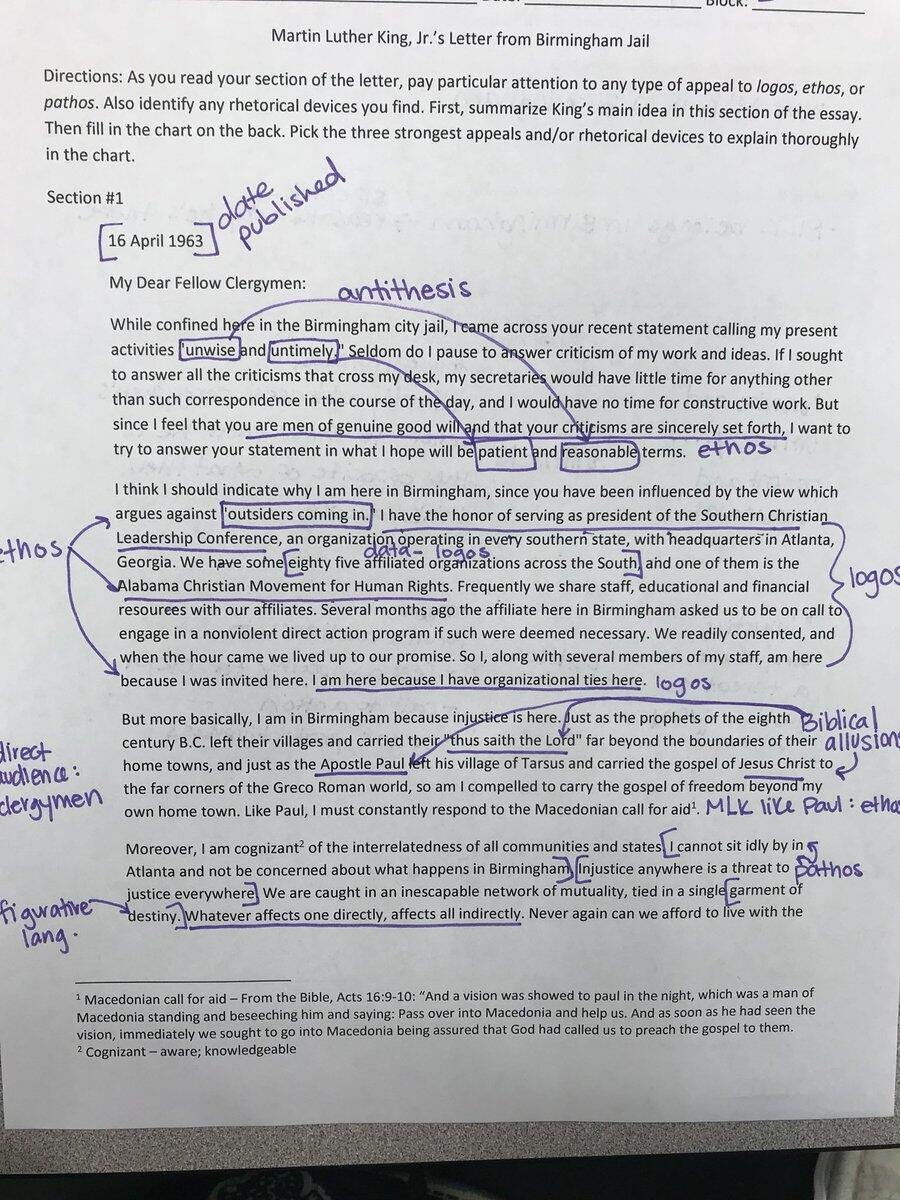
Understanding the context in which the Letter from Birmingham Jail was written is crucial to a comprehensive rhetorical analysis. King’s letter was a response to a public statement by eight white Alabama clergymen who had denounced the civil rights protests as unwise and untimely. King’s masterful response not only addressed the clergymen’s criticisms but also presented a compelling case for the urgency and morality of the civil rights movement. By considering the historical, social, and political context of the letter, analysts can better understand the strategic choices King made in crafting his argument.
Whole Class Rhetorical Analysis Through Letter From Birmingham Jail Then It Was Students Turn To Find Read Analyze And Argue For Why Their Document Should Be Considered A Seminal Text Students Are
Analyzing Rhetorical Devices
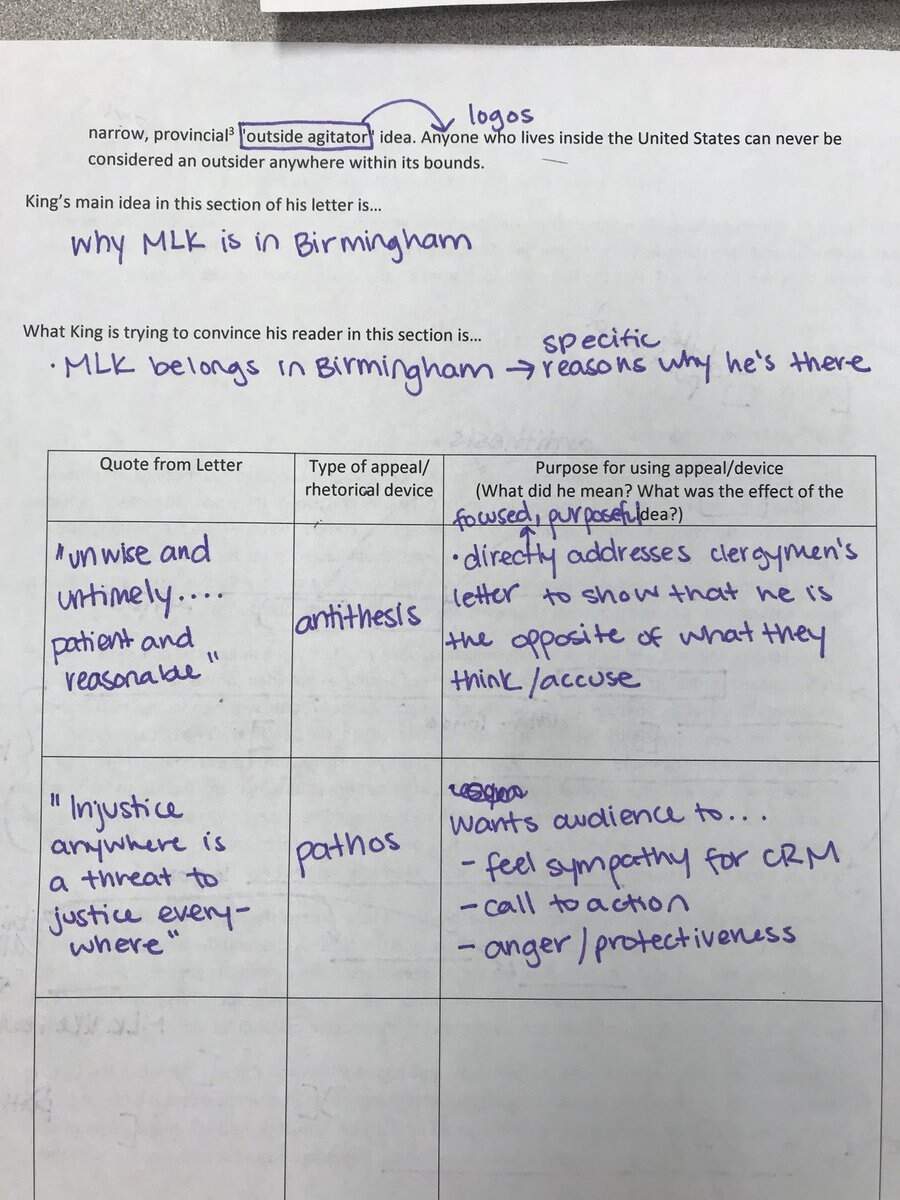
Analyzing rhetorical devices is a key component of the Letter From Birmingham Jail Rhetorical Analysis Worksheet. King’s letter is renowned for its rich use of rhetorical devices, which contribute significantly to its persuasive power. For example, King’s use of pathos, or emotional appeal, is evident in his vivid descriptions of the injustices faced by African Americans. His employment of ethos, or ethical appeal, is seen in his references to religious and historical figures, which serve to establish his credibility and moral authority. By identifying and examining these devices, analysts can uncover the layers of meaning and persuasion embedded in the letter.
Applying Critical Thinking
Applying critical thinking skills is essential when working through the Letter From Birmingham Jail Rhetorical Analysis Worksheet. Critical thinking involves not just identifying the rhetorical devices and strategies used by King but also evaluating their effectiveness and considering alternative perspectives. This might involve questioning the assumptions underlying King’s arguments, assessing the strength of his evidence, or contemplating the potential counterarguments he might have anticipated. Through critical thinking, analysts can engage more deeply with the letter, moving beyond mere identification of techniques to a nuanced understanding of their impact and significance.
Solved Rhetorical Analysis Worksheet Letter From Chegg
The process of completing a Letter From Birmingham Jail Rhetorical Analysis Worksheet is not only an educational exercise but also a reflective one. It invites users to consider the ongoing relevance of King’s message and the strategies he employed to bring about change. In an era where social justice movements continue to rely on persuasive communication to challenge injustices and advocate for human rights, the lessons gleaned from King’s letter remain profoundly important. By studying this landmark document through the lens of rhetorical analysis, individuals can hone their critical thinking skills, deepen their understanding of persuasive communication, and perhaps even find inspiration for their own efforts to contribute to positive social change.
Solved Rhetorical Analysis Worksheet Letter From Chegg
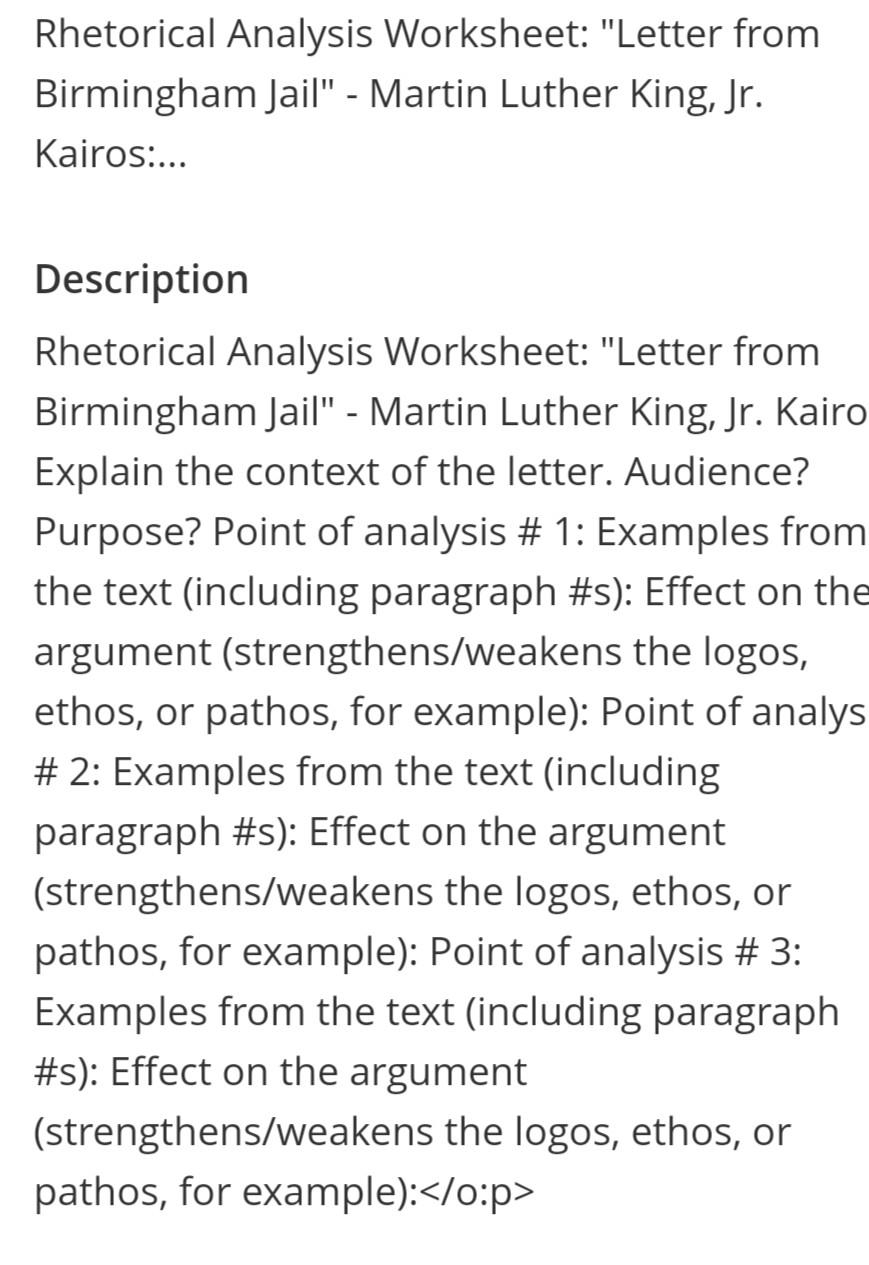
Solved Rhetorical Analysis Worksheet Letter From Chegg