English grammar can be complex, especially when it comes to verb conjugation. One of the rules that often confuse learners is the doubling of the last letter to form the past tense of certain verbs. This rule applies to verbs that end in a consonant followed by a single vowel and then another consonant. Understanding and applying this rule correctly is crucial for effective communication in English.
The doubling rule is not only relevant for regular verbs but also affects the spelling of verbs in the past tense. For instance, when conjugating the verb ‘run’ into its past tense form, it becomes ‘ran’, but for a verb like ‘sit’, the past tense form is ‘sat’. However, for verbs that follow the specific pattern of ending in a consonant-vowel-consonant sequence, the last consonant is doubled before adding the past tense suffix. This pattern is essential for maintaining consistency in English spelling and pronunciation.
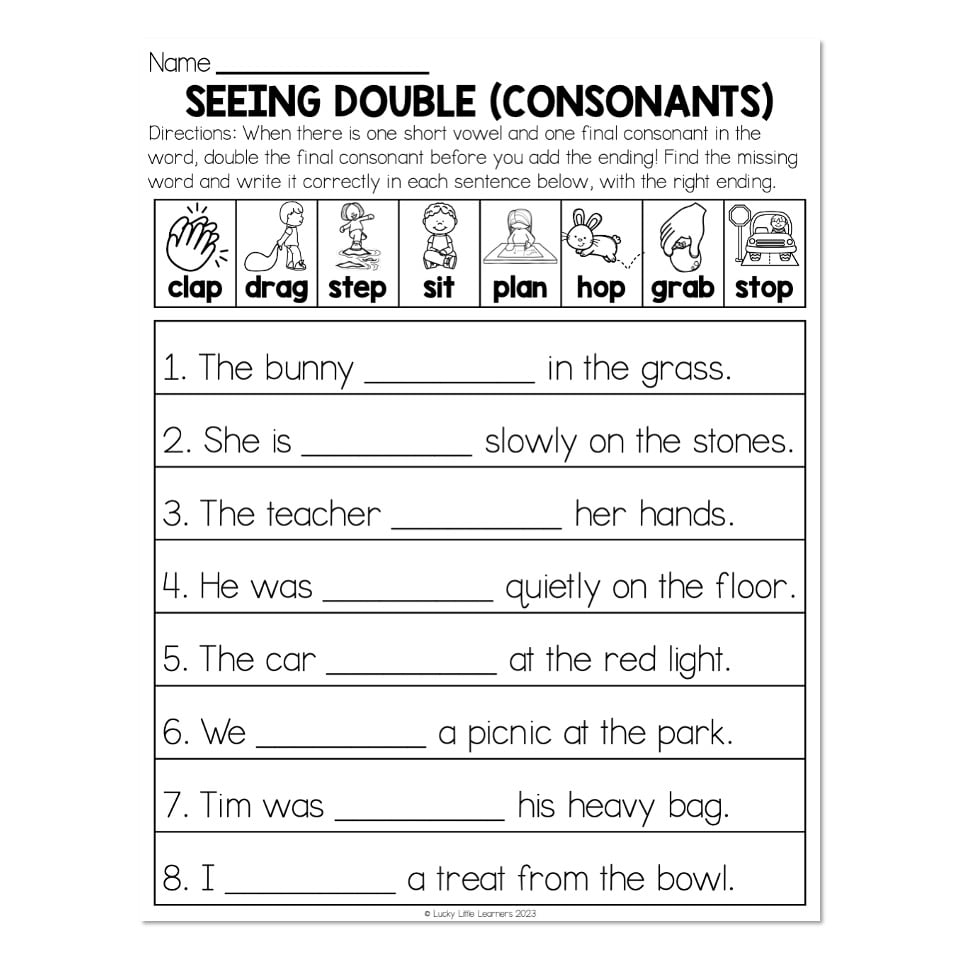
Free Double Final Consonant Worksheet Download Free Double Final Consonant Worksheet Png Images Free Worksheets On Clipart Library
Understanding the Rule of Doubling the Last Letter
The rule of doubling the last letter to show the past tense is based on the phonetic and orthographic patterns of the English language. It ensures that the pronunciation of the verb in its past tense form remains consistent with its base form. For example, the verb ‘hop’ becomes ‘hopped’ in the past tense, with the ‘p’ being doubled to maintain the short vowel sound. Understanding this rule is key to correctly conjugating verbs and avoiding common spelling mistakes.
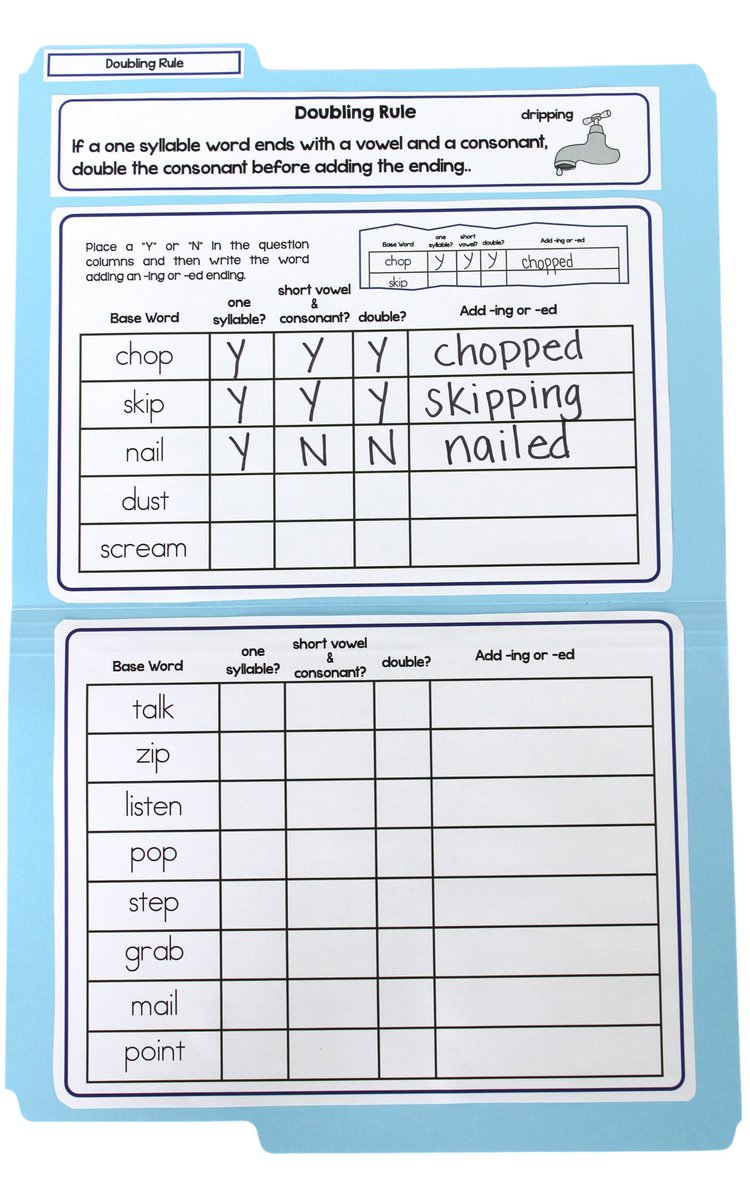
Teaching The Doubling Spelling Rule Blog MakeTakeTeach
Examples of Verbs that Double the Last Letter in the Past Tense
There are numerous verbs in English that double their last letter when converted into the past tense. These include ‘stop’ becoming ‘stopped’, ‘rob’ becoming ‘robbed’, and ‘kiss’ becoming ‘kissed’. Recognizing these patterns and practicing with examples can significantly improve one’s proficiency in English grammar. Moreover, being aware of these verb forms can enhance one’s ability to express thoughts and actions in the past tense accurately and confidently.
Practicing with a Doubling Last Letter to Show Past Tense Worksheet
To reinforce the understanding and application of the doubling rule, utilizing a doubling last letter to show past tense worksheet can be highly beneficial. Such worksheets typically provide a list of verbs and ask the learner to conjugate them into their past tense forms, applying the doubling rule where necessary. This practical exercise can help learners identify verbs that follow the doubling pattern and solidify their knowledge through repetition and practice. Additionally, it offers an opportunity to learn from mistakes and develop a more intuitive sense of English verb conjugation.
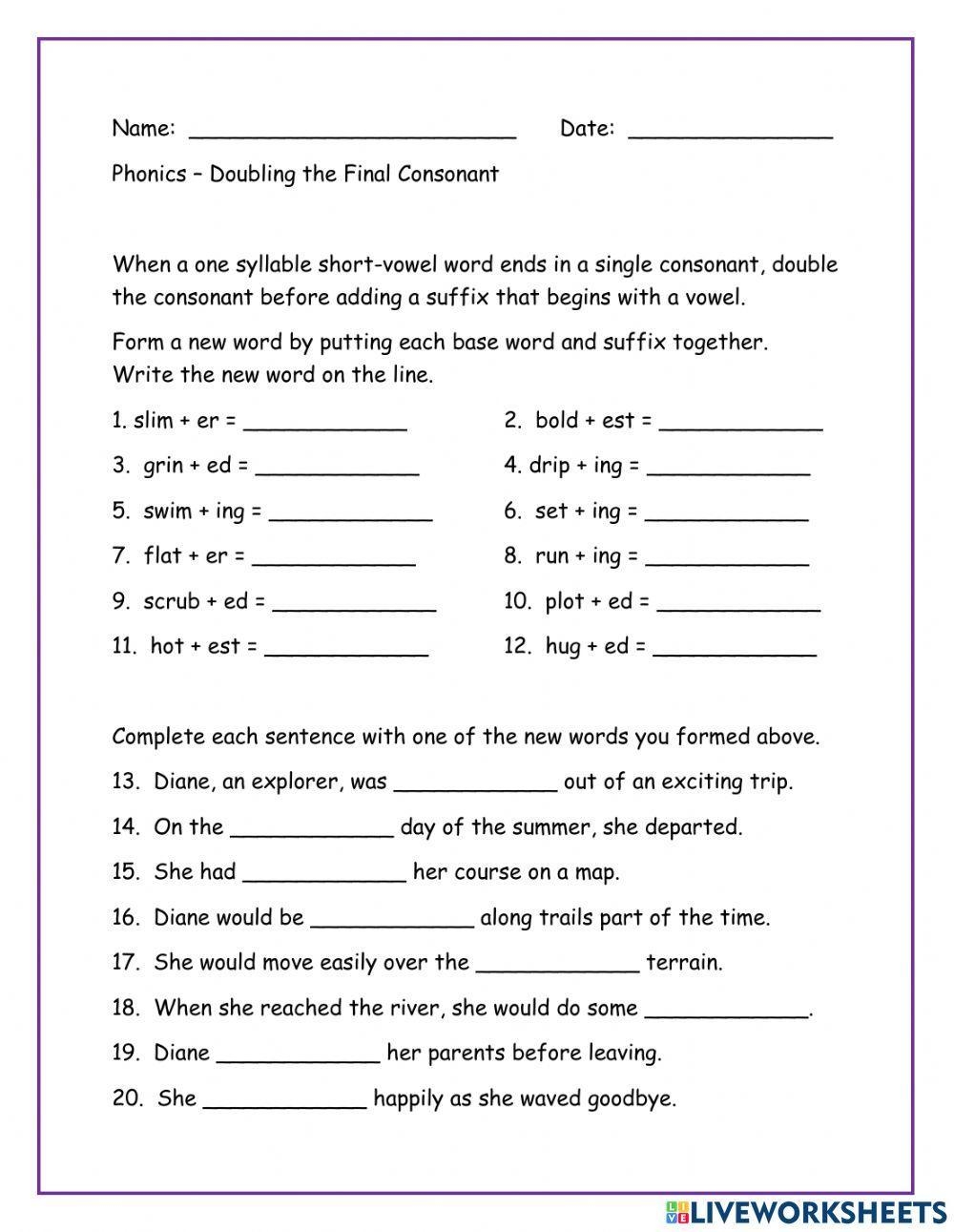
Free Double Final Consonant Worksheet Download Free Double Final Consonant Worksheet Png Images Free Worksheets On Clipart Library
In conclusion, mastering the rule of doubling the last letter to show the past tense is a fundamental aspect of English grammar. By understanding the underlying principles and practicing with relevant exercises, such as a doubling last letter to show past tense worksheet, learners can improve their accuracy in conjugating verbs and enhance their overall proficiency in English. Regular practice and exposure to a variety of verb forms will make the application of this rule more instinctive, leading to clearer and more effective communication.
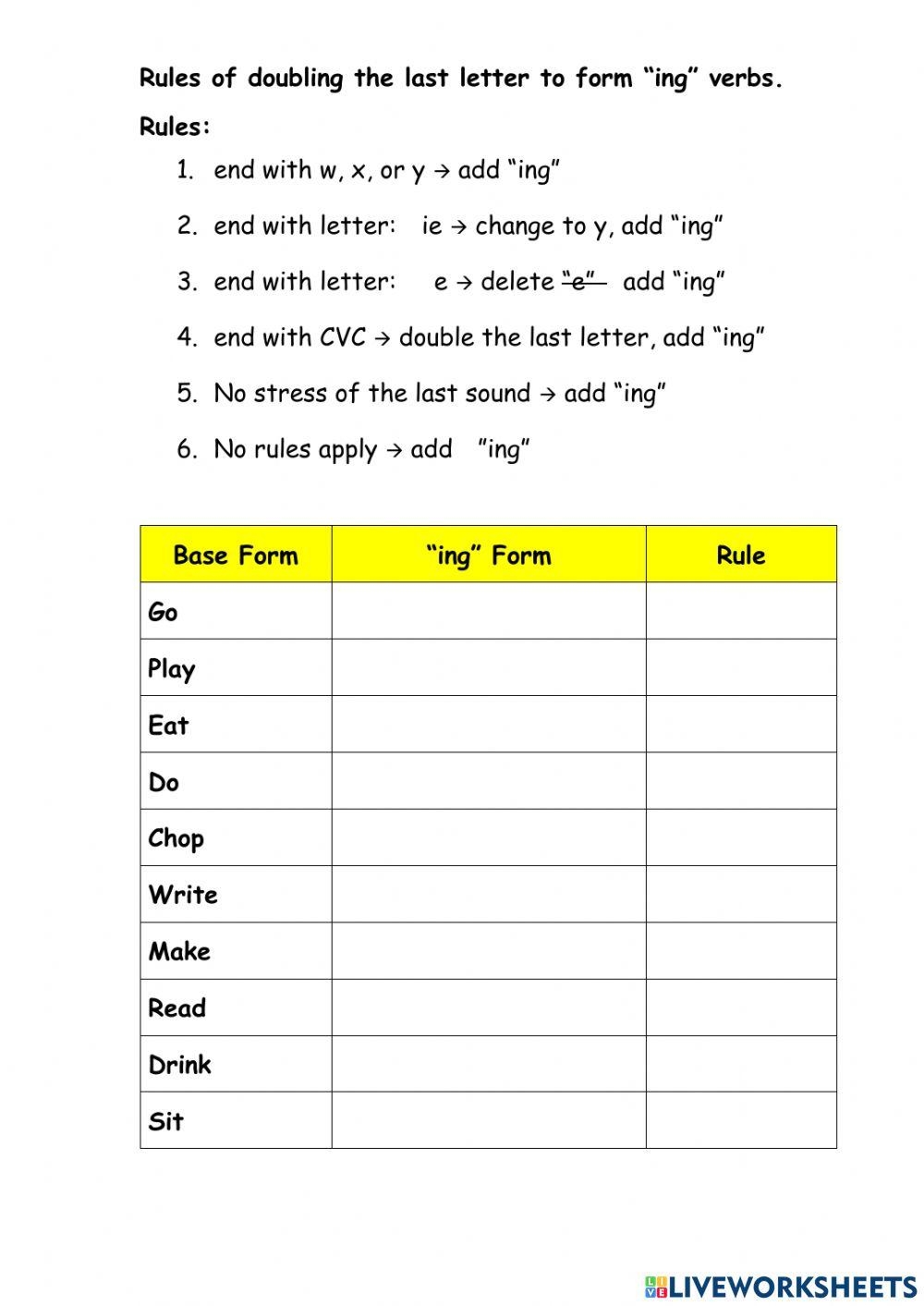
Rules Of Doubling The Last Letter To Form Ing Worksheet Live Worksheets Library
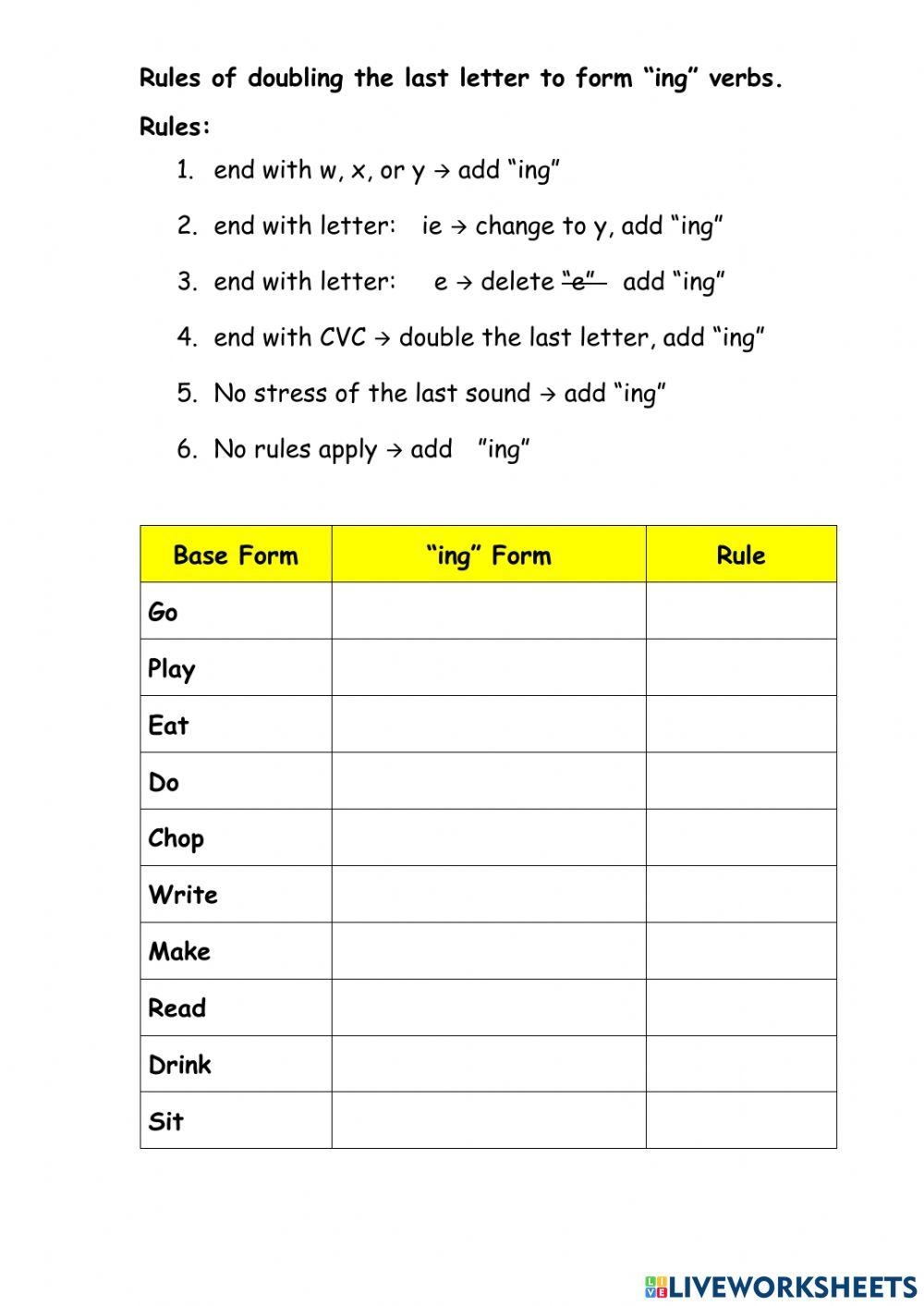
Rules Of Doubling The Last Letter To Form Ing Worksheet Live Worksheets Library