The Letters From Birmingham Jail, written by Martin Luther King Jr. in 1963, is a powerful and thought-provoking document that has become a cornerstone of social justice education. The letter, addressed to eight white clergymen, responds to their criticism of the civil rights movement and provides a compelling argument for nonviolent civil disobedience. As a teaching tool, the Letters From Birmingham Jail worksheet offers a unique opportunity for students to engage with the letter’s themes and ideas, developing critical thinking and empathy skills in the process.
The worksheet typically includes a range of activities, such as reading comprehension questions, vocabulary exercises, and essay prompts, designed to help students understand the historical context and significance of the letter. By working through the worksheet, students can gain a deeper appreciation for the struggles and triumphs of the civil rights movement, as well as the ongoing quest for social justice and equality. Moreover, the worksheet can be adapted to suit different age groups and learning styles, making it a versatile and effective resource for educators.
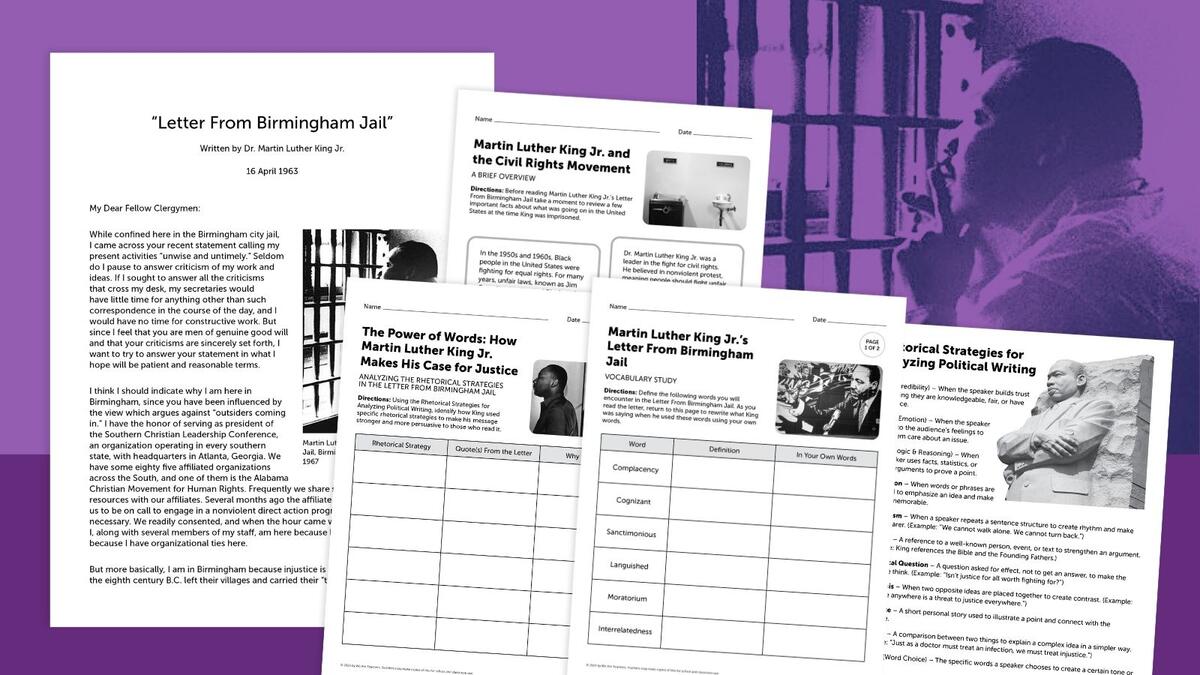
MLK Jr S Letter From Birmingham Jail Worksheet Bundle
Understanding the Context
To fully understand the context of the Letters From Birmingham Jail, it’s essential to consider the social and political climate of the time. The letter was written during a period of great upheaval and change, with the civil rights movement gaining momentum and facing fierce resistance from those who opposed equality and justice. By examining the historical context, students can better appreciate the courage and conviction of Martin Luther King Jr. and other civil rights leaders, as well as the ongoing struggle for human rights and dignity.
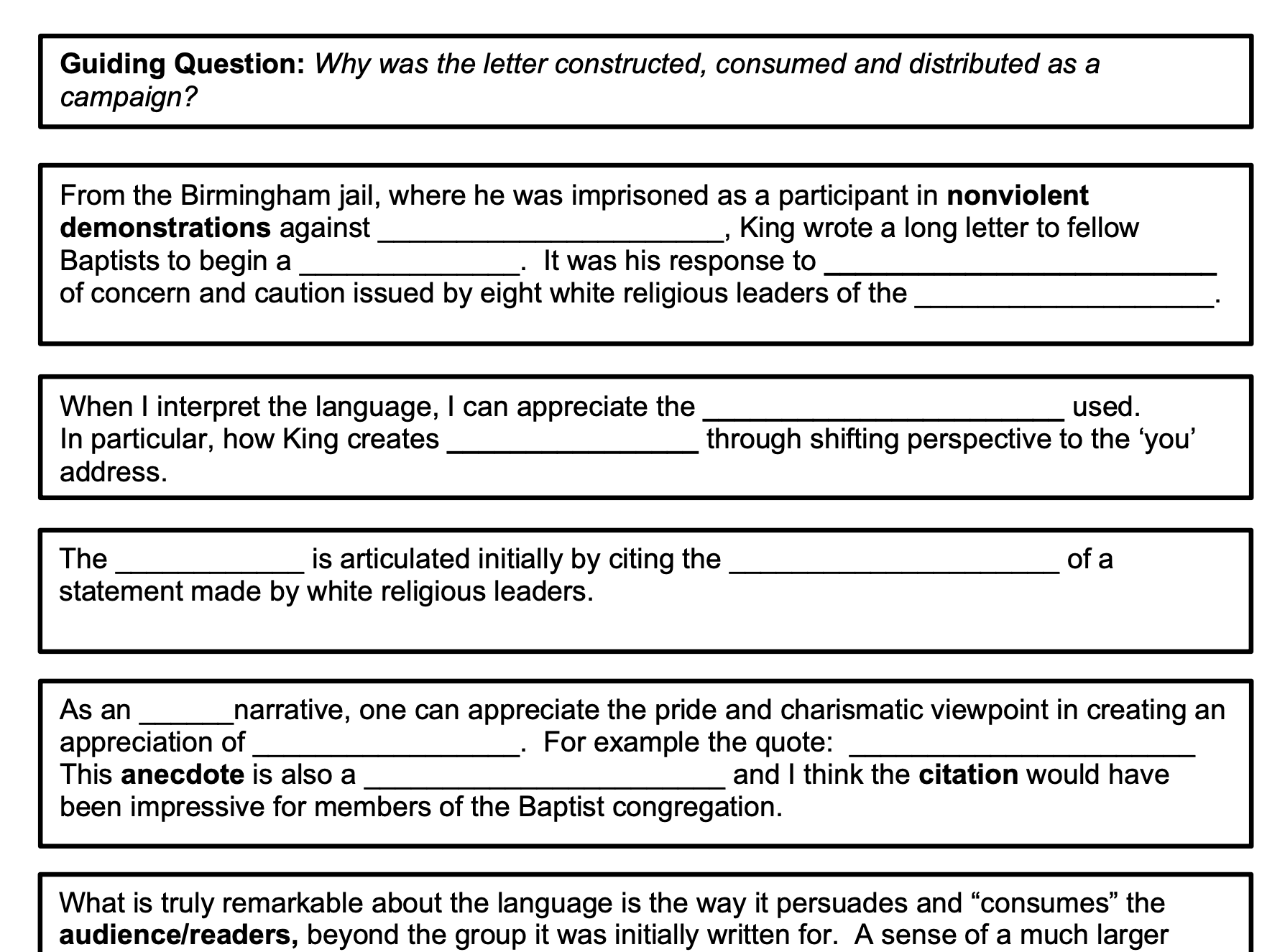
Letter From Birmingham Jail Teaching Resources
Analyzing the Letter
Analyzing the letter itself is a crucial part of the learning process, as it requires students to carefully consider the language, tone, and arguments presented by Martin Luther King Jr. The worksheet can include questions and prompts that encourage students to think critically about the letter’s structure, syntax, and rhetorical devices, as well as its central themes and ideas. By analyzing the letter in depth, students can develop a nuanced understanding of the civil rights movement and its significance, as well as the power of nonviolent resistance and social activism.
Applying the Lessons
The lessons learned from the Letters From Birmingham Jail worksheet can be applied to a wide range of social justice issues and causes, from racial equality and gender rights to environmental justice and economic empowerment. By exploring the connections between the civil rights movement and contemporary social justice struggles, students can develop a deeper understanding of the ongoing quest for human rights and dignity. Moreover, the worksheet can inspire students to become active participants in social justice movements, using their knowledge and skills to make a positive impact in their communities and beyond.
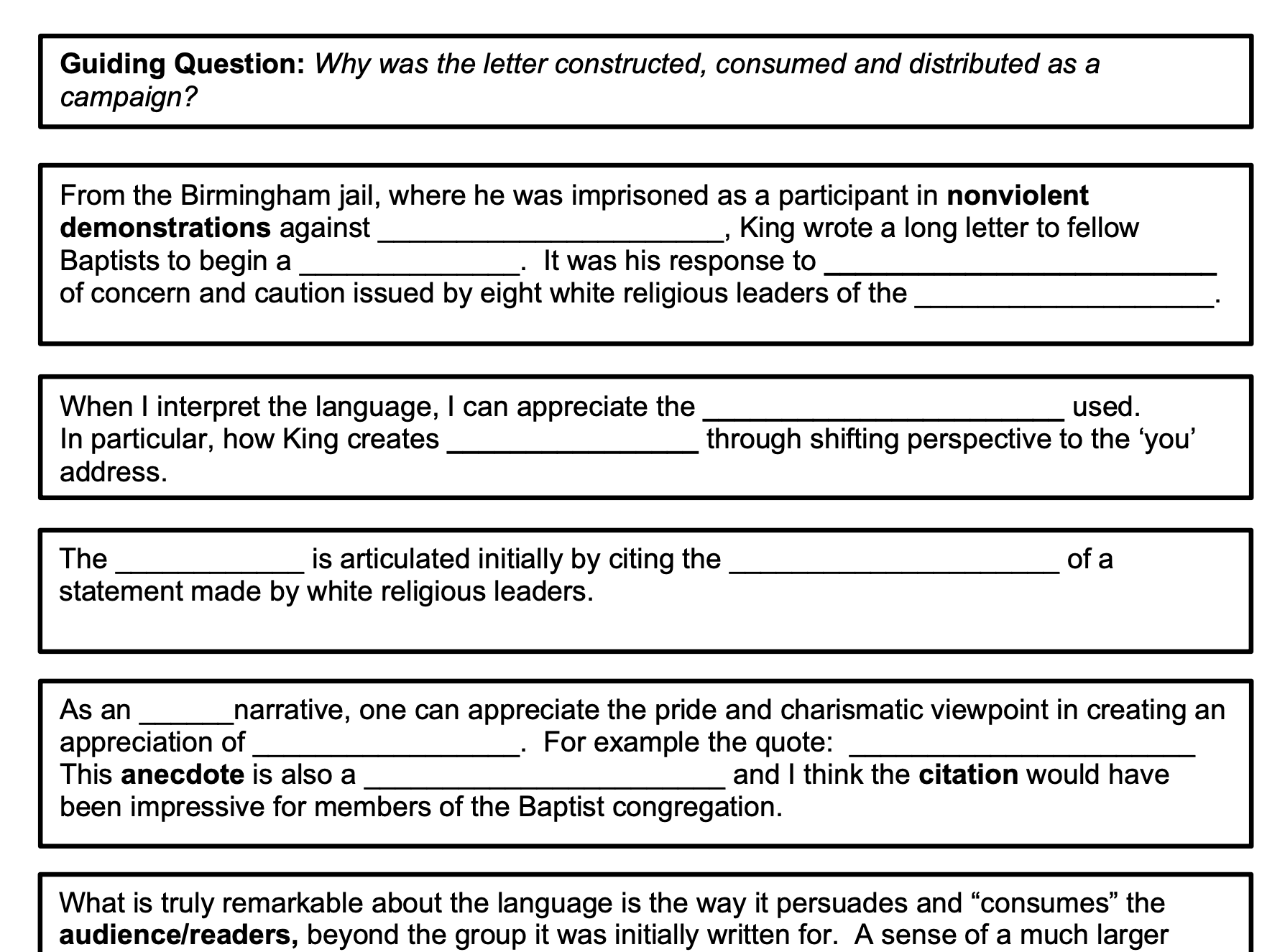
Letter From Birmingham Jail Teaching Resources
Ultimately, the Letters From Birmingham Jail worksheet offers a powerful tool for teaching social justice, empathy, and critical thinking skills. By engaging with the letter and its themes, students can develop a deeper appreciation for the struggles and triumphs of the civil rights movement, as well as the ongoing quest for human rights and dignity. As educators, we can use the worksheet to inspire and empower students, helping them to become active participants in creating a more just and equitable world for all.
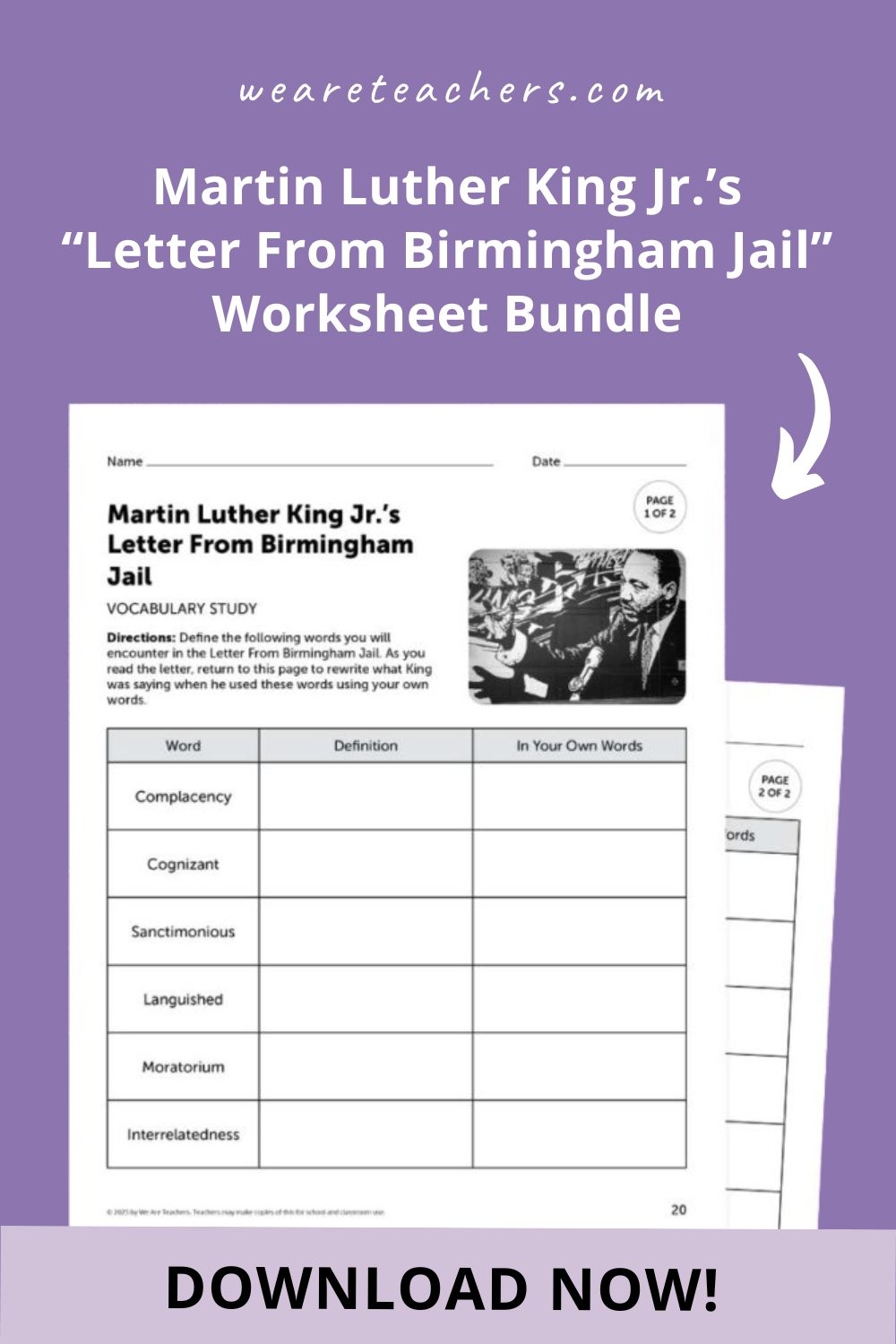
MLK Jr S Letter From Birmingham Jail Worksheet Bundle
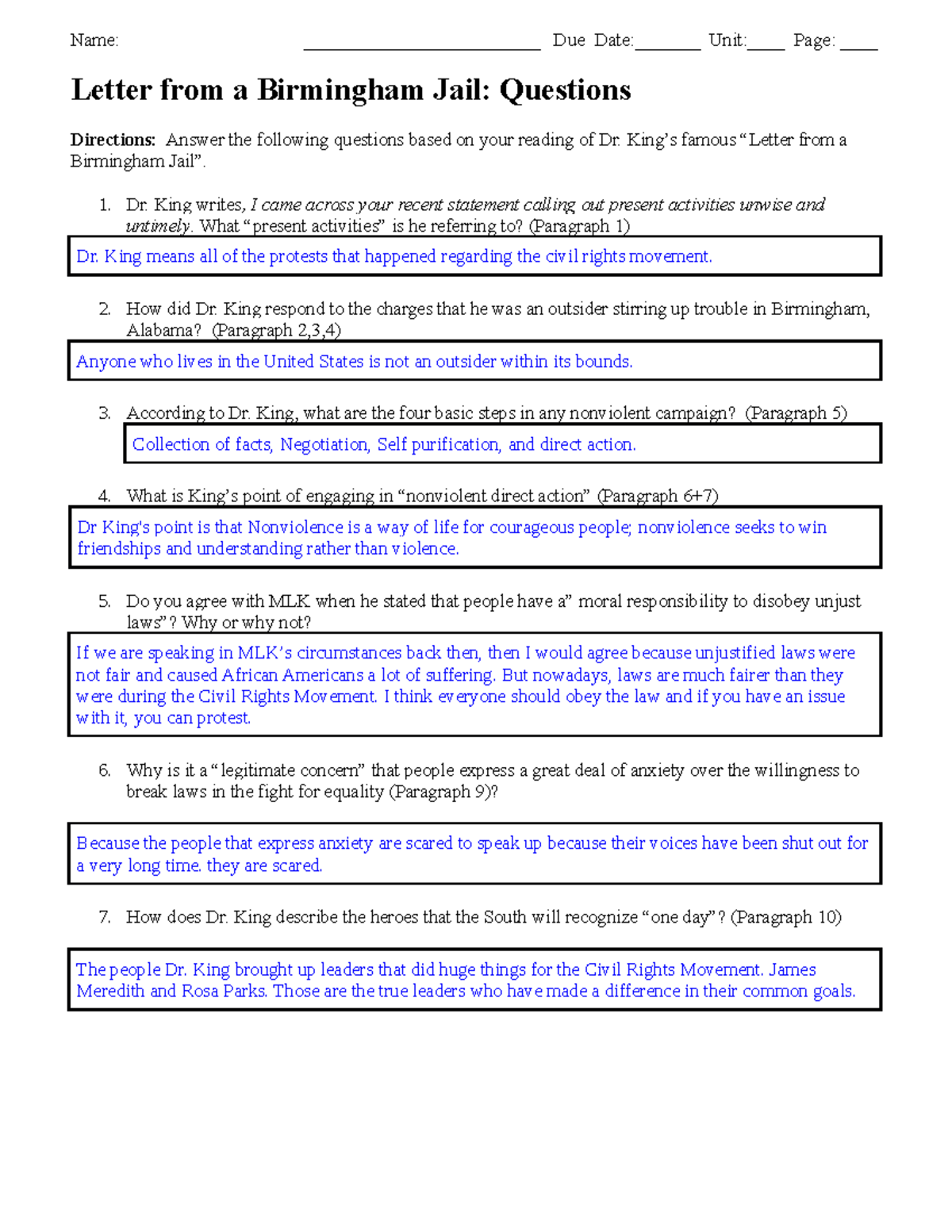
Letter From Birmingham Jail Questions Analysis Reflection NG Studocu