The tragic tale of Macbeth, one of Shakespeare’s most renowned plays, revolves around the ambitions and downfall of its titular character. At the heart of this narrative is the relationship between Macbeth and his wife, Lady Macbeth, whose interactions and influence on each other drive the plot forward. One pivotal element in their story is the letter Macbeth writes to Lady Macbeth, detailing his encounter with the witches and their prophecies. This letter not only showcases Macbeth’s initial hesitation and eventual resolve but also highlights Lady Macbeth’s role in goading him towards committing the regicide.
For educators and students alike, dissecting this letter and its implications within the play is crucial for a deeper understanding of Shakespeare’s work. The Macbeth’s Letter To Lady Macbeth Worksheet is designed to facilitate this analysis, offering a structured approach to exploring the themes, character motivations, and literary devices present in the letter. By examining the language, tone, and content of the letter, individuals can gain insight into the psychological states of the characters and the dramatic tension that pervades the narrative.
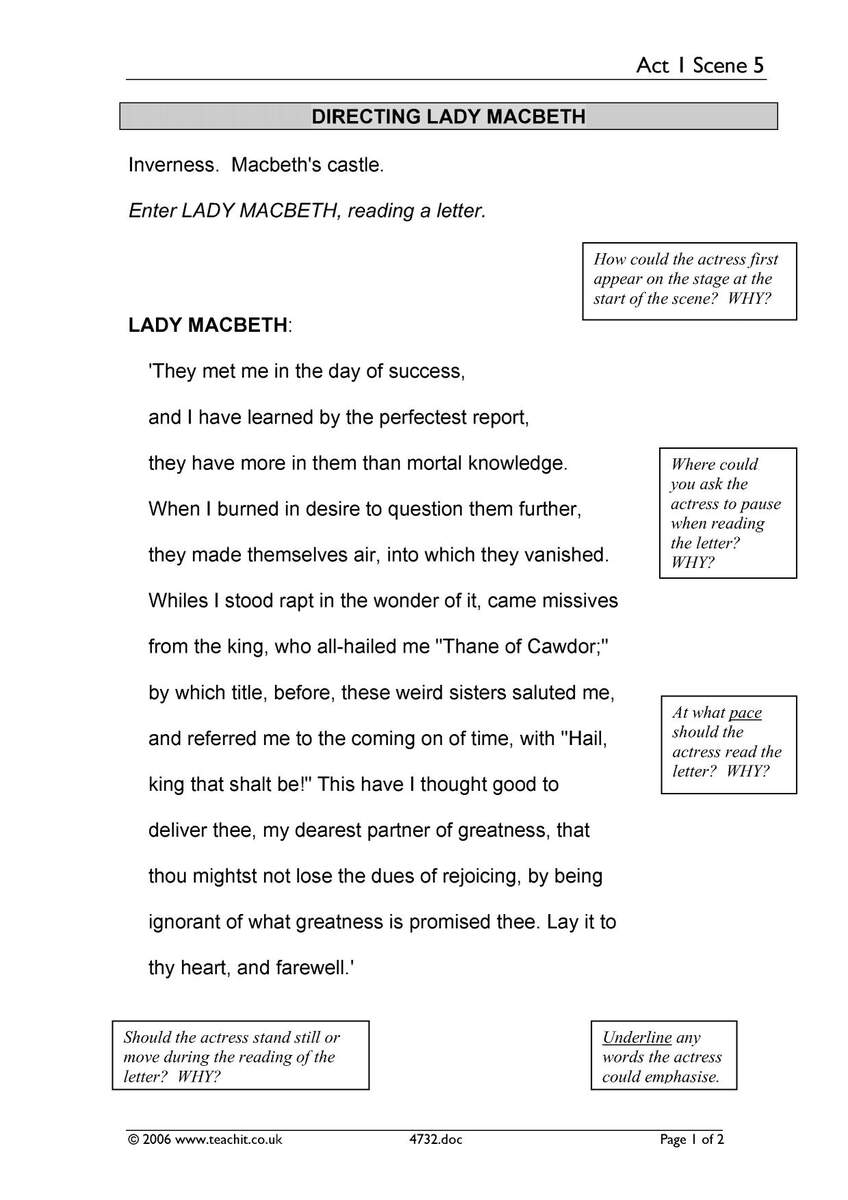
Directing Lady Macbeth Act 1 Scene 5
Understanding the Context
To fully grasp the significance of Macbeth’s letter, it’s essential to understand the context in which it was written. The witches’ prophecies have ignited a spark of ambition in Macbeth, but it’s the letter that serves as a catalyst for the events that unfold. The worksheet prompts learners to consider the historical and theatrical context of the play, including the beliefs about witchcraft and the supernatural during Shakespeare’s time. This broader understanding enhances the interpretation of the letter and its role in the plot.
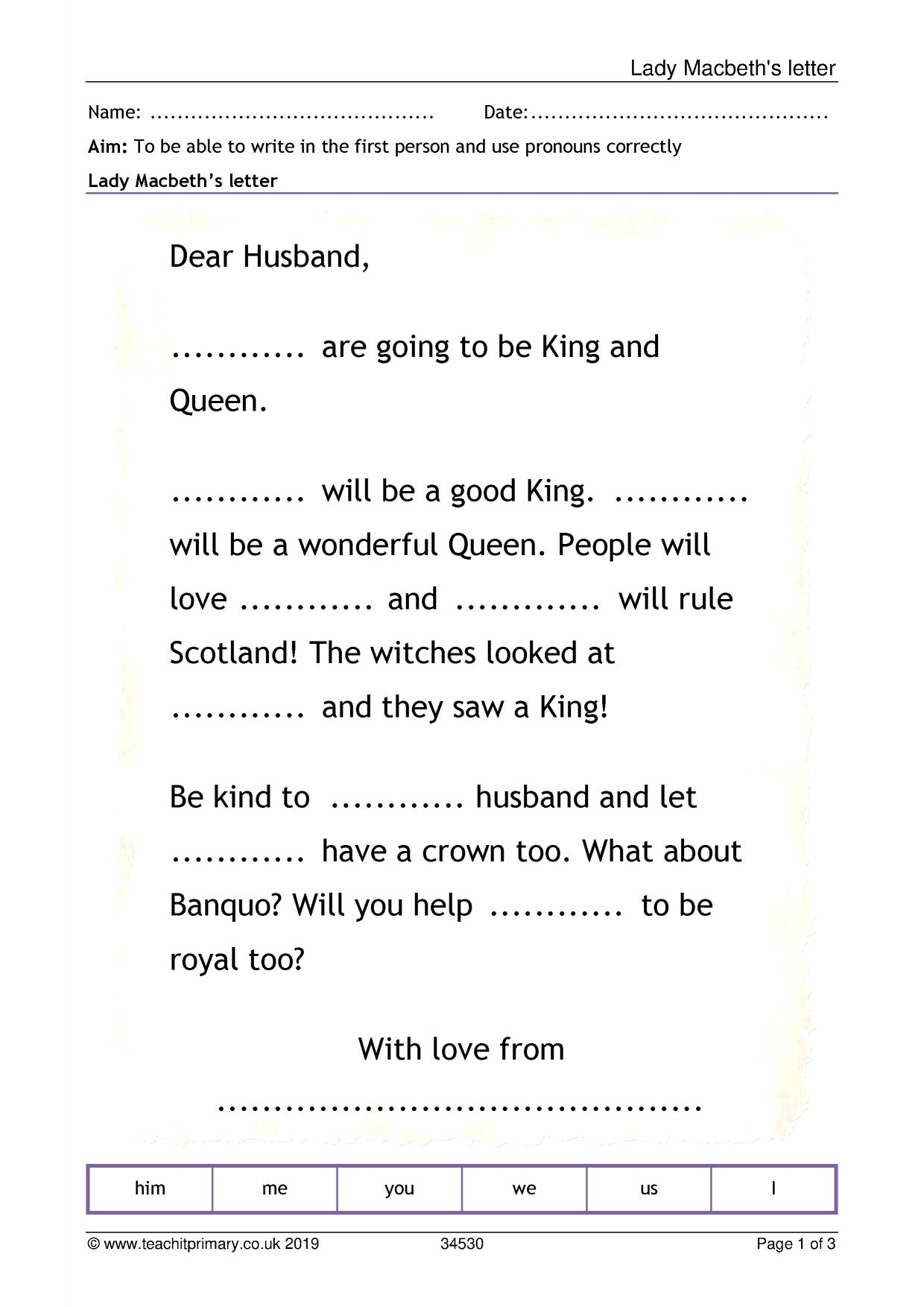
Lady Macbeth Pronouns Letter KS2 English Teachit
Analyzing the Letter
Analyzing the letter itself reveals a wealth of information about Macbeth’s character and his relationship with Lady Macbeth. The worksheet guides users in identifying key phrases and sentences that indicate Macbeth’s conflicted state of mind and his evolving ambitions. Furthermore, it encourages an examination of how Lady Macbeth responds to the letter, highlighting her manipulative nature and the ways in which she influences Macbeth’s decisions. This close reading not only enriches the understanding of the characters but also sheds light on the thematic elements of ambition, guilt, and the consequences of one’s actions.
Teaching with the Worksheet
Teaching with the Macbeth’s Letter To Lady Macbeth Worksheet offers educators a versatile tool for engaging students with Shakespeare’s work. The worksheet can be adapted for various learning styles and levels, from prompting basic comprehension questions to inspiring more advanced analyses of literary themes and character development. Additionally, it can serve as a springboard for creative projects, such as writing a response from Lady Macbeth or imagining an alternative scenario based on the letter’s contents. This interactive approach makes the study of Macbeth more accessible and enjoyable, fostering a deeper appreciation for Shakespeare’s masterpiece among students.
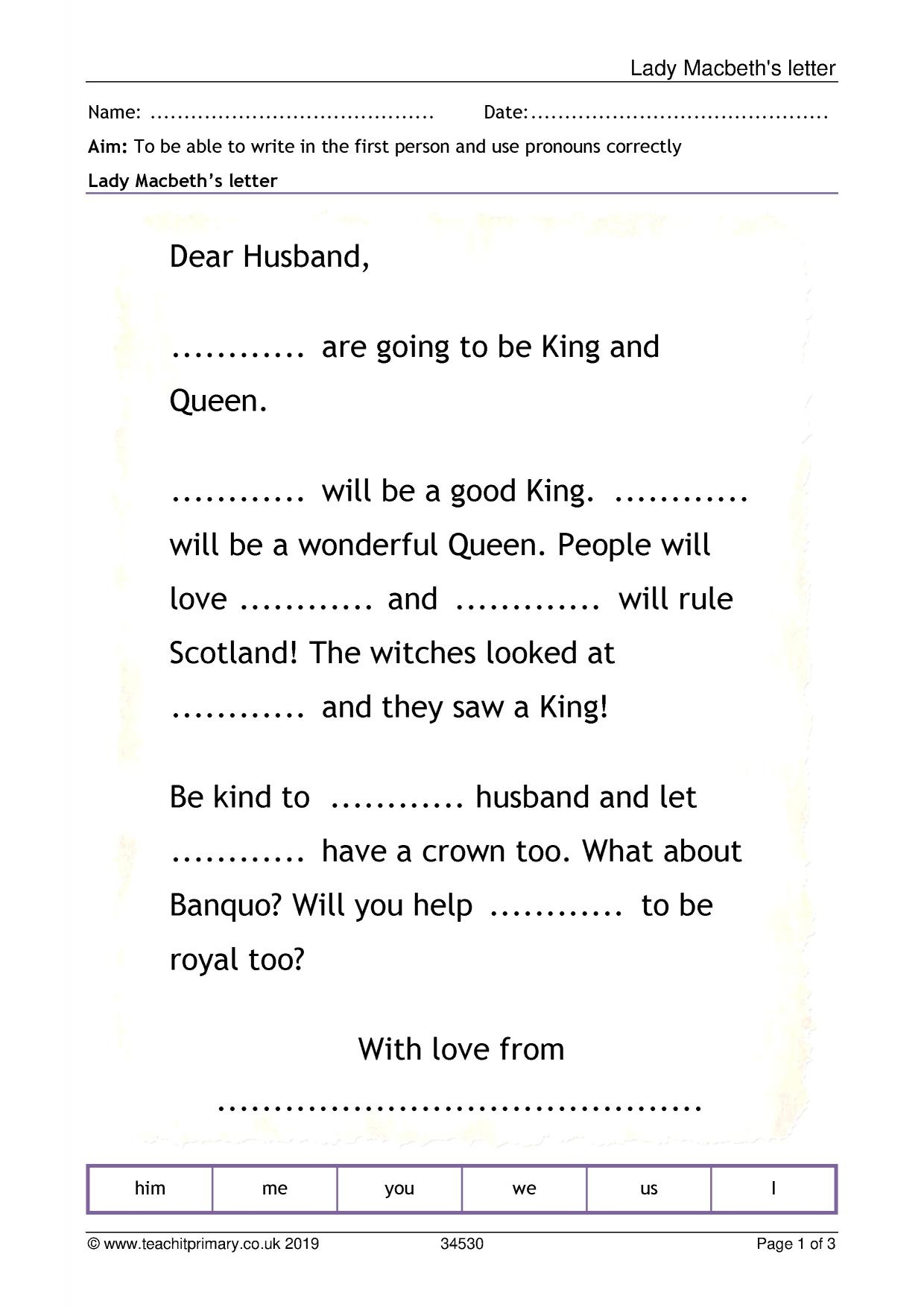
Lady Macbeth Pronouns Letter KS2 English Teachit
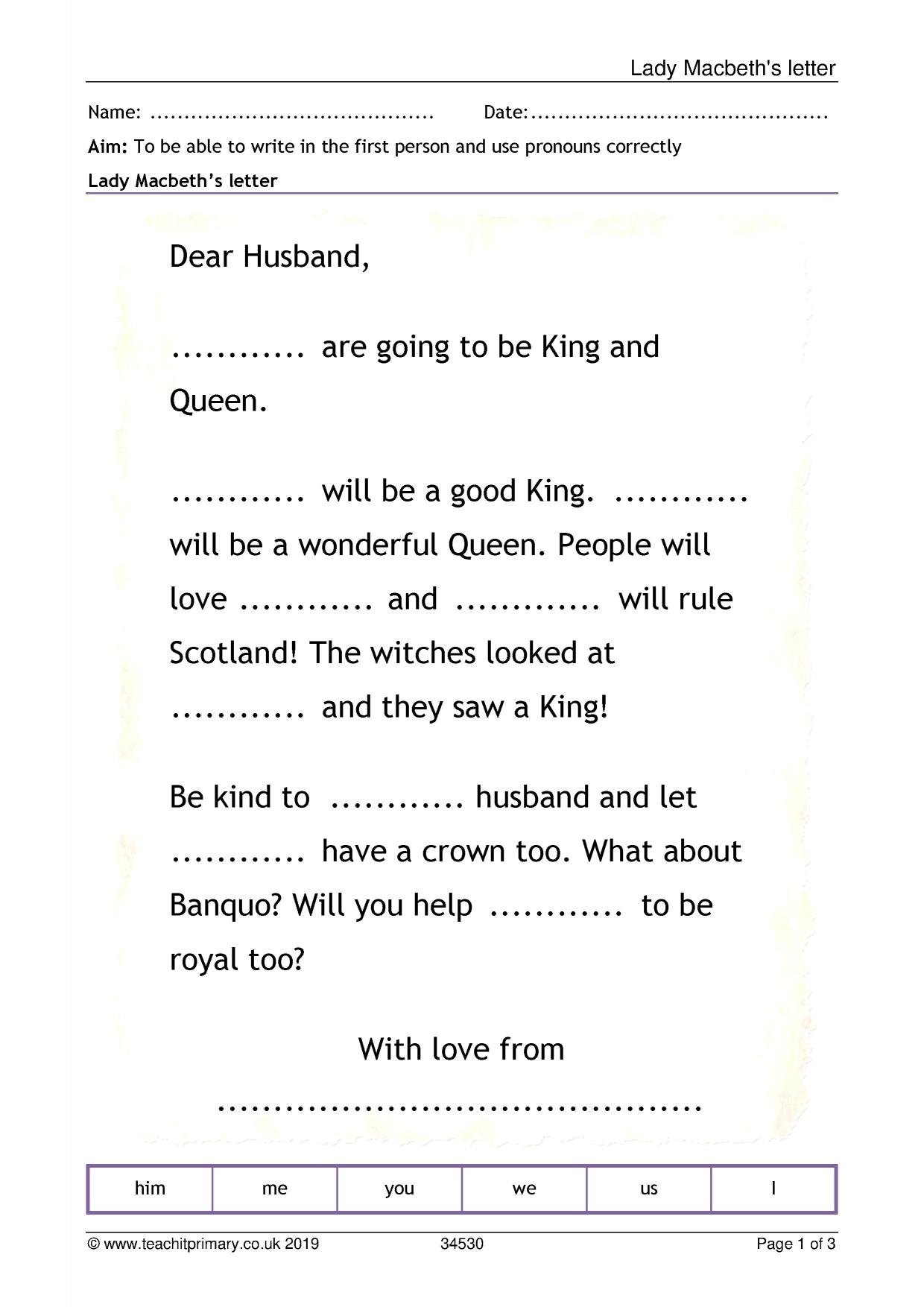
Lady Macbeth Pronouns Letter KS2 English Teachit
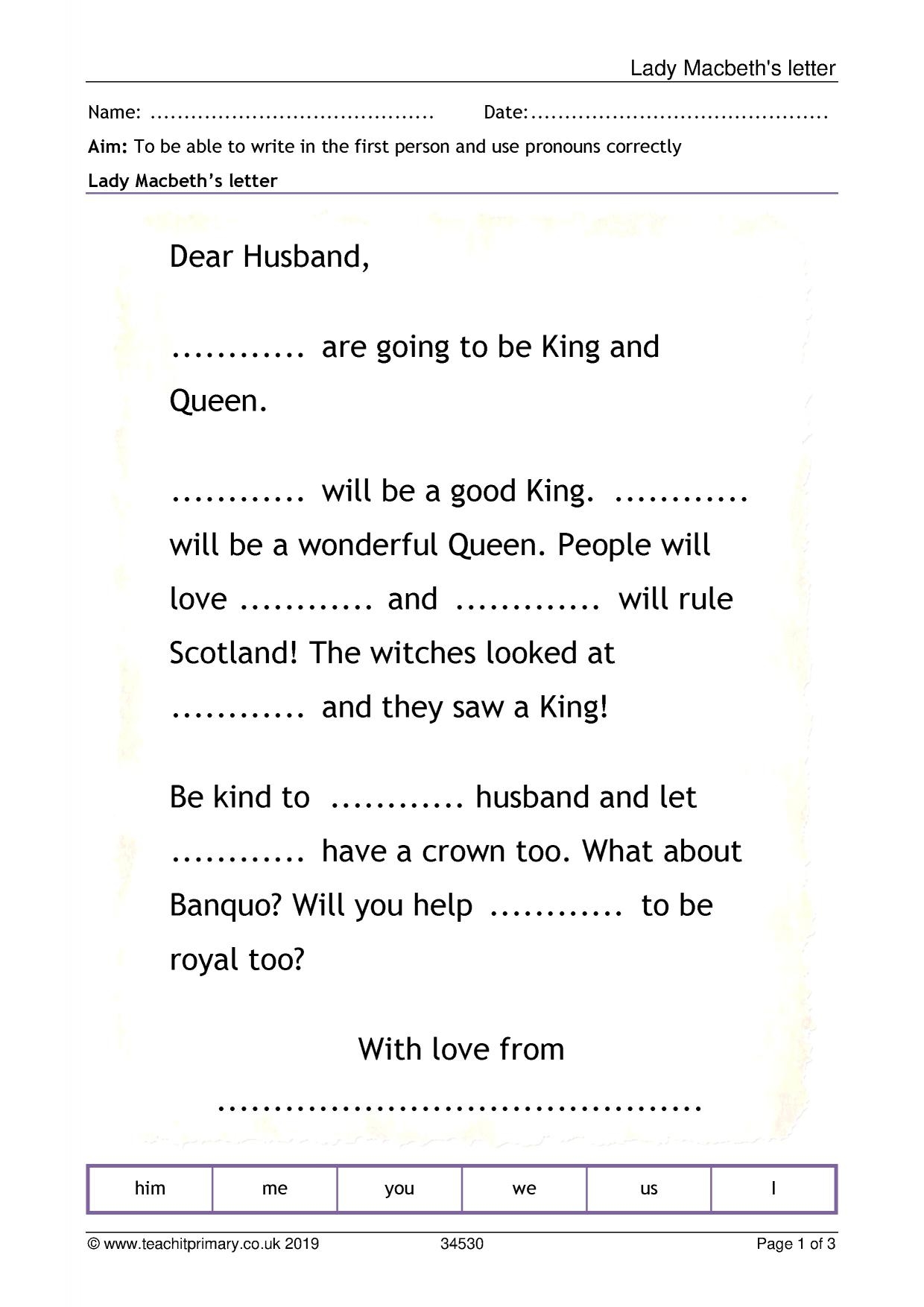
Lady Macbeth Pronouns Letter KS2 English Teachit